
Pendo doesn't publish its pricing. What you do is request a quote, sit through a demo, and weeks later, you'll see the number land in your inbox.
Based on compiled contract data, the median buyer pays about $48,000 annually, with some bills that reach six figures. Meaning that for product teams at a 20-person SaaS company, it’s close to the cost of a new hire!
In this post, we’ll go through the best Pendo alternatives in 2026, and exactly how the compare.
The short version
The following are some of the best alternatives to Pendo:
Yaplet is the best all-in-one for in-app guides, surveys, feedback roadmaps, chat, and support in one subscription. Free plan available; paid plans start at $99/month.
Userpilot is the nearest equivalent for onboarding and in-app guidance, with public pricing starting at $299/month.
Mixpanel is one of the best free options for product analytics, covering events, retention, and funnels. Free up to 1M events monthly.
Amplitude is great for deep behavioral analytics. Free up to 10,000 tracked users per month.
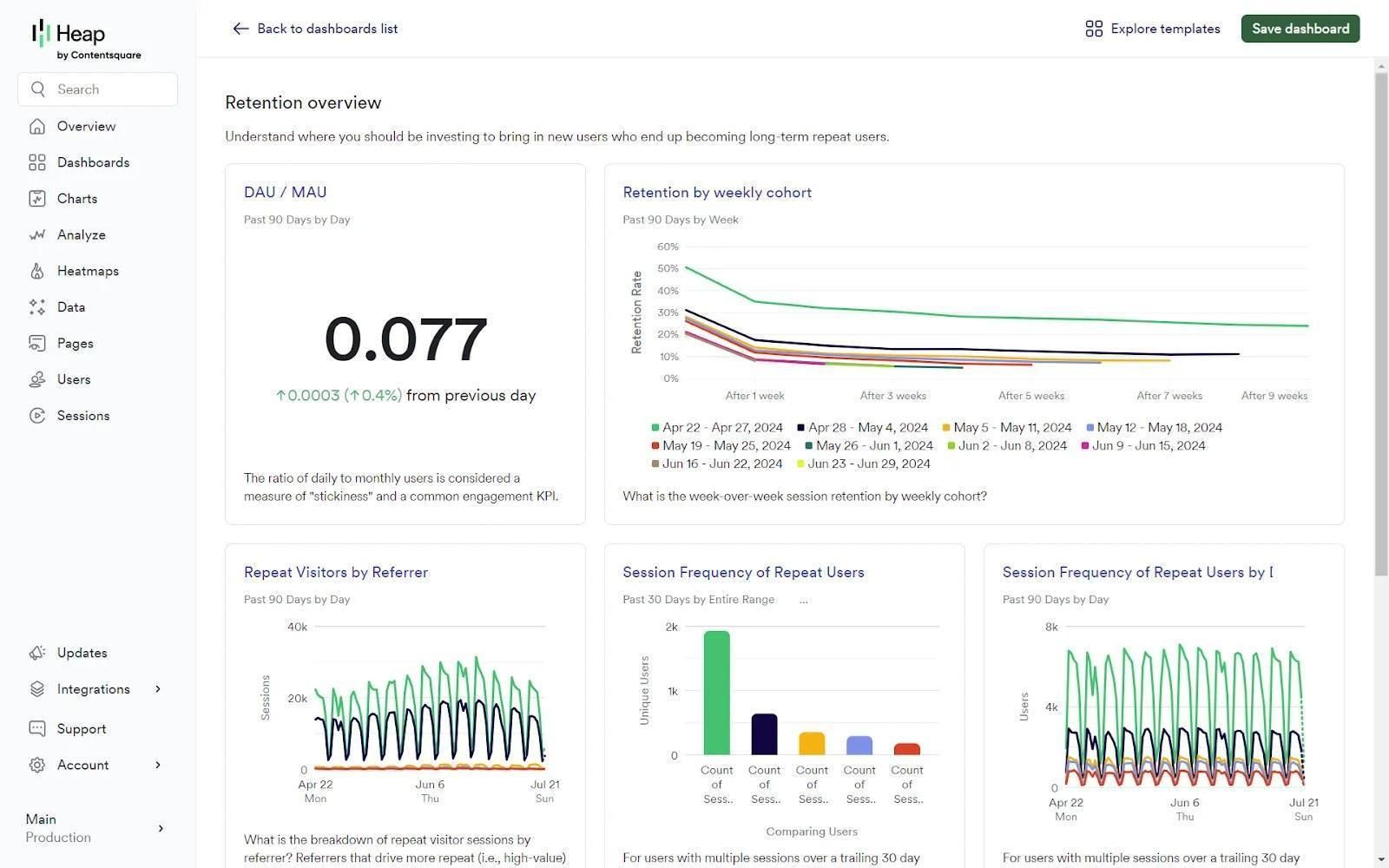
Heap handles analytics without needing you to tag or define every event by hand. They give up to 10,000 sessions for free.
Match the tool to the job, and most teams can cut their bill by 80 to 95 percent.
Why teams are switching from Pendo
Pendo is undeniably a good product; it brings lots of tools together. Product analytics, in-app guides, NPS in one place, works across web and mobile, and at enterprise scale, that unification is well worth it. The only trouble, of course, is when smaller teams try to fit inside it.
The pricing is hard to read. Every paid plan is a custom quote tied to your user's activity each month. With a 500 MAU cap for the free tier, it becomes a threshold a real product can surpass within a week, meaning you'll end up negotiating well past the $48,000 median.
The top tier hides the best features. Session reply, NPS, product discovery, and journey orchestration are either in the higher tier or available as paid add-ons. This leaves a team paying enterprise prices for a platform they use only half the time.
Pendo is a heavy tool, and it rewards someone who owns it full-time. Without that, you're only paying for something you'll never truly maximize.
So that then begs the question: "Which Pendo job am I actually paying for?"
The 5 best Pendo alternatives
1. Yaplet: the all-in-one option for guidance and feedback
Starting price:Free forever. Growth is $99/month (most popular), with a 14-day trial and no card to start.
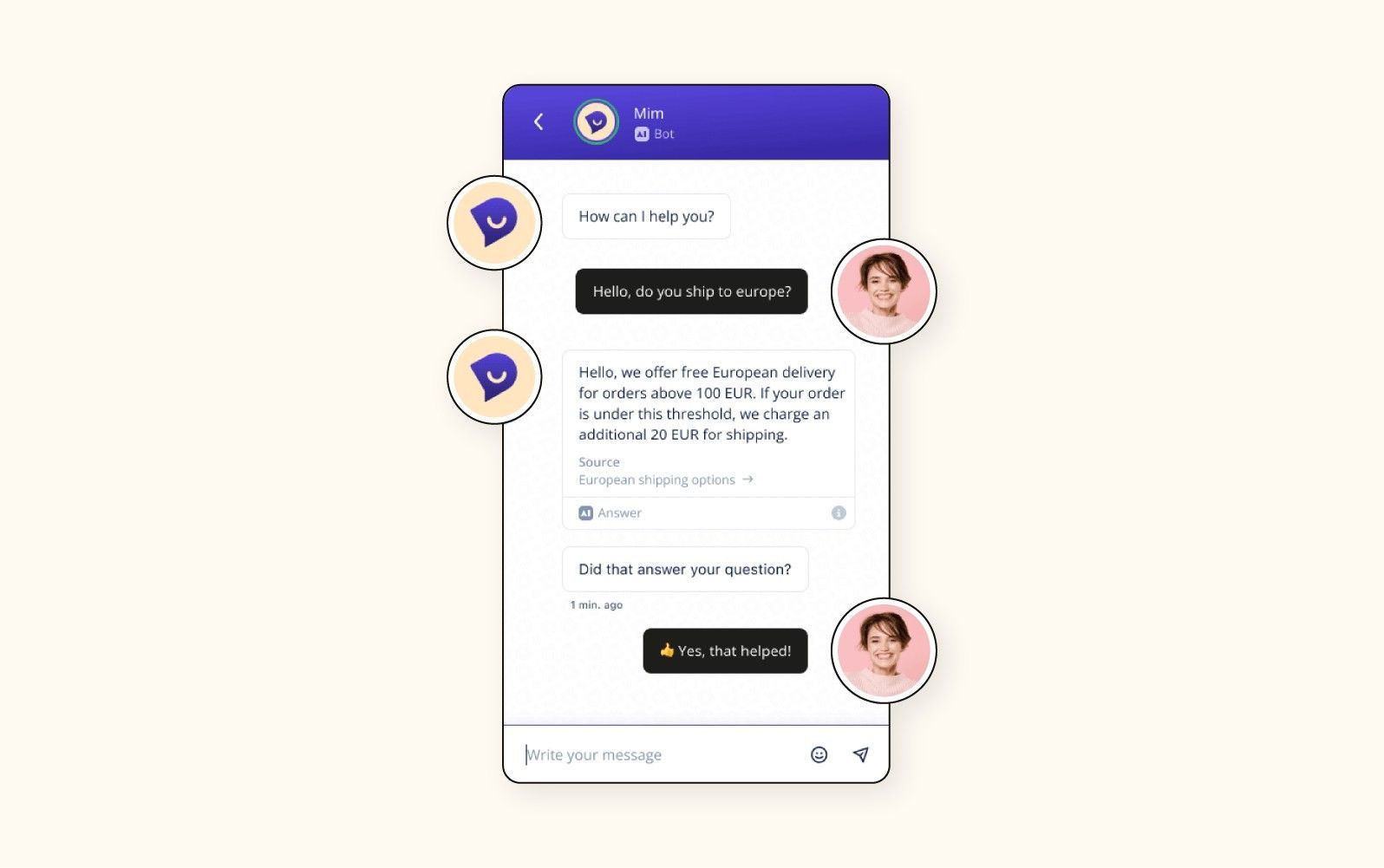
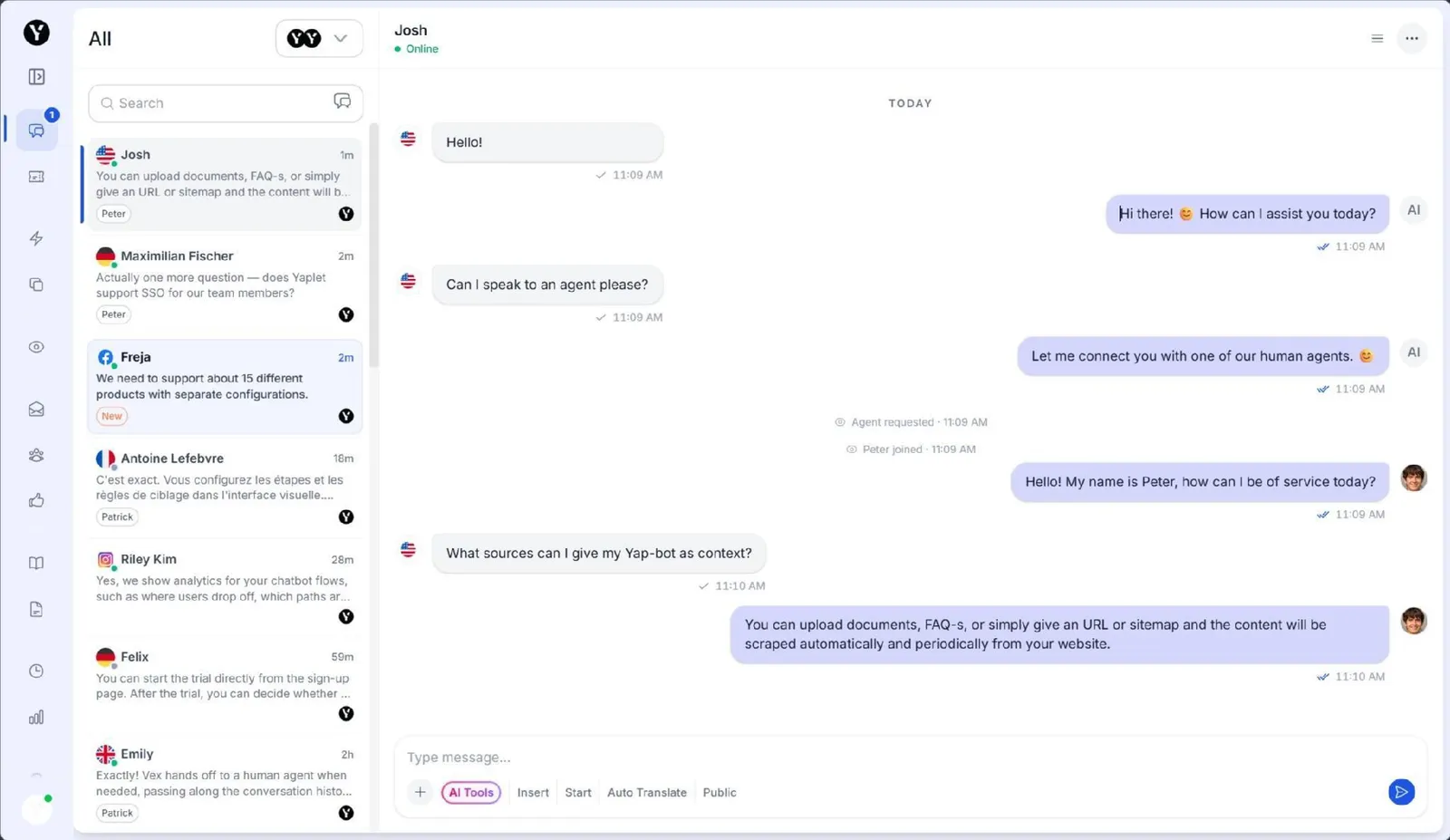
Yaplet is best for SMB product teams and the support people next to them who may want in-app guidance and a feedback loop without a complicated enterprise platform. Not only that, but it also replaces parts used by a smaller team, such as no-code product tours, forms and surveys, a public roadmap with live chat, and the Vex AI agent.
With Yaplet, you can launch your first product tour in under 10 minutes using a point-and-click editor. It also includes built-in surveys, a public roadmap, and AI-powered support, keeping feedback, feature requests, and customer conversations in one place.
Yaplet, however, focuses more on customer engagement, making advanced analytics less of a priority. If you're a team that heavily relies on funnel analysis, tracking your cohorts, or any other in-depth analysis, then you'll likely need a dedicated analytics tool to work alongside it.
2. Userpilot: the closest like-for-like for onboarding and in-app guides
Starting price: From $299/month billed annually, for up to 2,000 monthly active users.
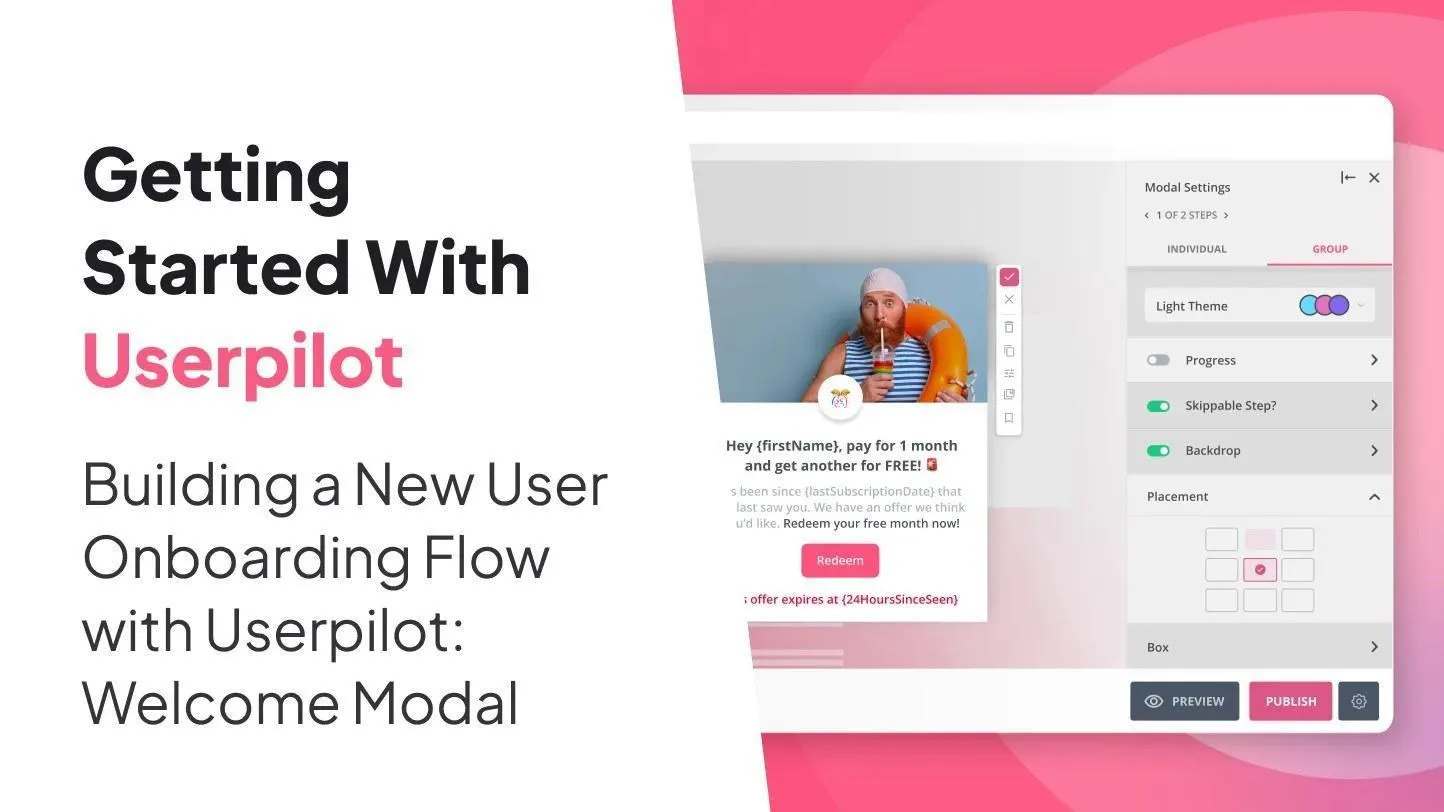
Userpilot is great for product-led SaaS teams who want Pendo-style onboarding and in-app guidance with transparent pricing.
It's a great no-code builder for flows, modals, and checklists. The in-app resource center, product analytics, surveys, and event-based triggers are great too. Taken together, they cover most of the in-app experiences found in mid-tier Pendo.
The downside is that the entry plan is annual-only and stops you at 2,000 MAUs. Once that threshold is crossed, you will then be moved to the Growth plan, which starts at 5,000 MAUs and returns to quote-based pricing. That jump is a cliff, not a step, so it’s worth modeling your growth before committing.
3. Mixpanel: the best free product analytics
Starting price: Free up to 1M events a month, then $0.28 per 1,000 events on Growth.
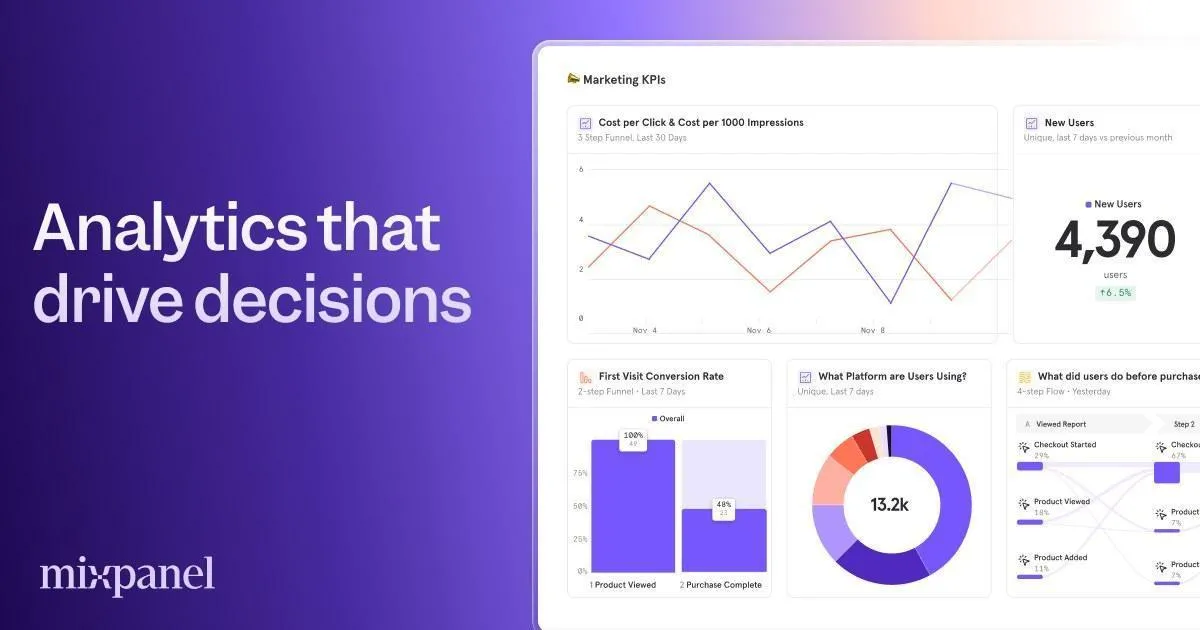
Mixpanel is for teams whose need from Pendo was to understand user behavior, which is usually done through event tracking, funnels, and retention across web and mobile, rather than in-app guides.
Its free tiers are generous for product analytics, offering unlimited seats and 10,000 session replays per month at no cost. Additionally, funnel and retention reports are provided so that a product manager can access them without requiring a data team.
One thing worth considering, though, is that it's analytics-only, and while it replaces half of Pendo, it offers none for in-app guidance. Event-based billing can also creep up once you push past the first million events.
4. Amplitude: the deepest behavioral analytics
Starting price: Free up to 10K monthly tracked users and 2M events. The Plus plan starts at $49/month billed annually.
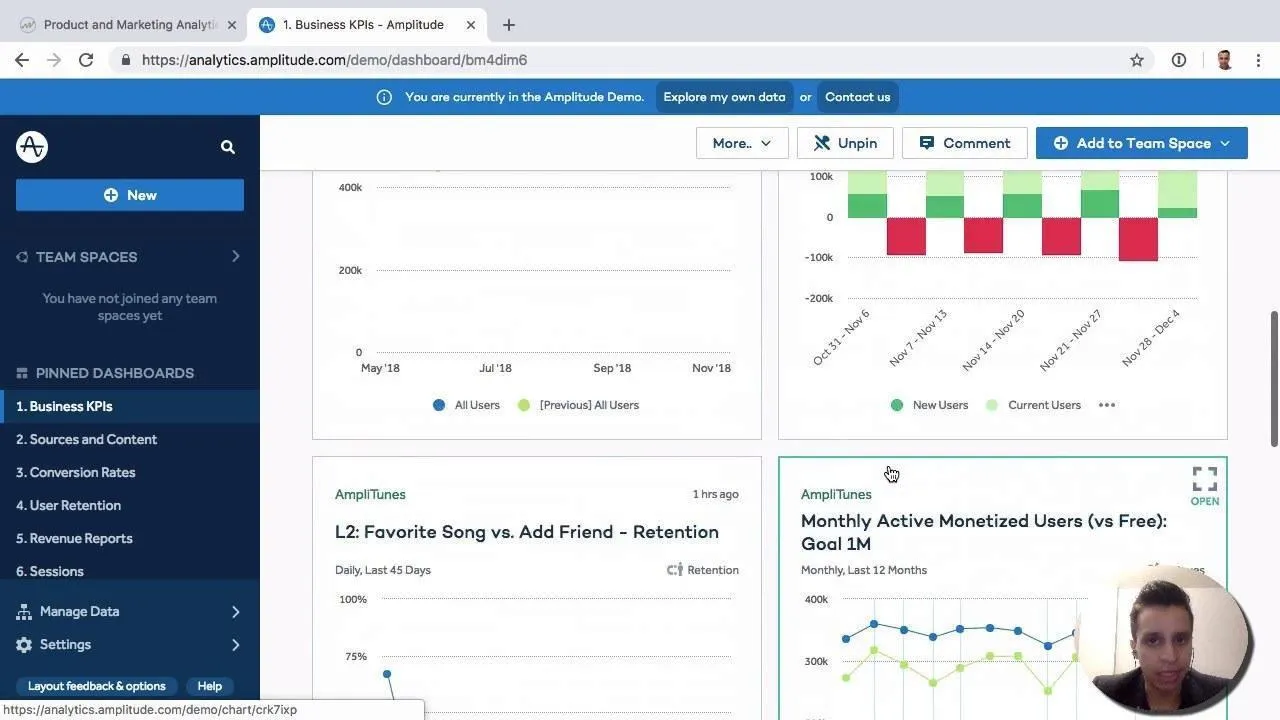
Amplitude is for product managers who are data-serious and want behavioral analytics, cross-segment segmentation, and experimentation within a single tool.
It's one of the most powerful behavioral analytics platforms on the market, paired with feature flags and experimentation, that track all user interactions across web and mobile apps.
The catch is that Amplitude's billing is based on both monthly tracked users and events, meaning there are two ways to hit a limit. Although the free tier is modest, Growth is custom-quoted, so the $49 entry price is short as you scale up. There are also no native in-app guides.
5. Heap: autocapture analytics for teams who hate tagging events
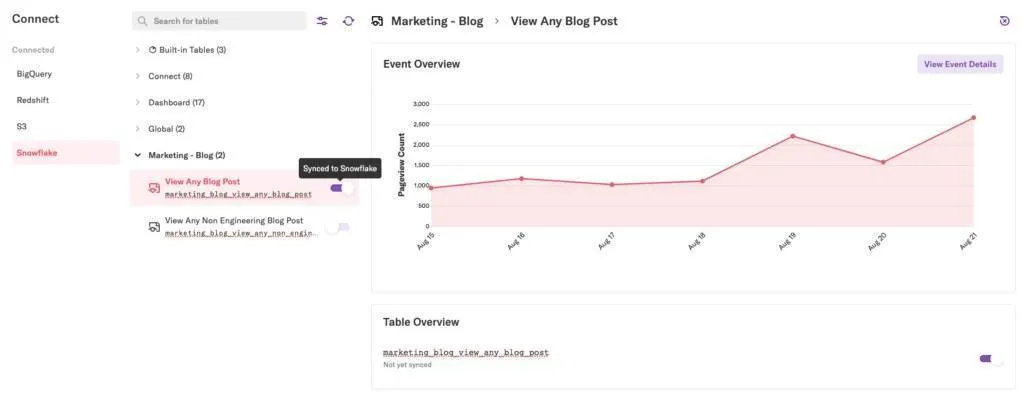
Starting price:Free up to 10K sessions a month with six months of history. Paid Growth, Pro, and Premier tiers are quote-based.
Autocapture is great for teams that want a solid product usage stage without every event defined upfront.
It automatically records user interactions, making it so you can answer questions you didn't think to instrument months ago. Now that it's part of Contentsquare, it combines event tracking with experience analytics, such as heatmaps and session replays, too.
The drawback is that paid pricing is quote-only and session-based, making cost prediction tedious. Some long-time users have also been watching the roadmap warily since the acquisition. And, like the rest of this group, it covers just analytics, not onboarding.
A quick word on Whatfix and WalkMe
If you've done your fair share of research, you'll likely come across the fact that Whatfix and WalkMe are two heavyweight digital adoption platforms. They are great at doing one job: rolling out in-app guidance on top of complex enterprise software like Salesforce or SAP, often across an entire app stack.
But if you're leaving Pendo to spend less, a digital adoption platform is the wrong direction. Both are quote-only, and compiled contract data puts WalkMe's average near $39,000 a year, while Whatfix runs pretty well into five figures and past $100,000 for multi-app rollouts.
These belong to large enterprises with purchasing teams, not to a team that's trying to cut expenses.
Pendo alternatives compared
Tool | Starting price | Best for | Standout feature | Honest limitation |
|---|---|---|---|---|
Pendo | Quote only, ~$48K/yr median | Enterprise product orgs | Analytics, guides, and NPS in one | Opaque MAU pricing, 500-MAU free cap |
Yaplet | Free; $99/mo Growth | SMB teams wanting guides, feedback, and support | 13 tools on one bill, no-code tours | Not a deep analytics engine |
Userpilot | $299/mo (annual), 2K MAU | PLG onboarding with public pricing | No-code flows and resource center | MAU cliff above the entry plan |
Mixpanel | Free to 1M events/mo | Event analytics on a budget | Generous free tier, fast funnels | Analytics only, no guides |
Amplitude | Free to 10K MTUs; $49/mo Plus | Deep behavioral analytics | Analytics plus experimentation | Dual MTU and event billing |
Heap | Free to 10K sessions/mo | Autocapture without tagging | Retroactive event capture | Paid tiers quote-only |
Whatfix | Quote only, five figures and up | Enterprise software rollouts | Multi-app digital adoption | Costs more than Pendo |
How to pick the right alternative for your team
You mainly need analytics. Start with something free, like Mixpanel for events and funnels. For deep behavioral analytics, go with Amplitude. If you would rather not manually define or tag events, Heap is a good choice.
You mainly need onboarding and in-app guides. Userpilot is the closest alternative with public pricing. If you also want surveys, a roadmap, and support, all in one tool, Yaplet is the best place to start.
You want to consolidate your stack. Yaplet covers in-app guides, feedback collection, and support on just one bill, with a free analytics tier for funnels.
You're a large enterprise rolling out internet software. In this case, Whatfix or WalkMe earns its place and price.
The cheapest way to test the move
You can always try the alternative without any procurement. Yaplet's free plan is forever zero-cost, and with it, you get one widget, one seat, 100 AI answers per month, and access to product tours, forms, and the roadmap. Pendo can cover ground, but you can cover more without spending a cent.
FAQ
Is there a free Pendo alternative?
Yes, there are several to choose from. Yaplet has its free-forever plan with product tours, surveys, and a feedback roadmap. Mixpanel, which is mostly used for analytics, offers free 1M events per month; Amplitude, with up to 10K tracked users per month; and Heap, with up to 10K sessions. Pair an all-in-one with a free analytics tier, and then you’re mostly doing what you can do with Pendo with the least amount of money spent.
How much does Pendo actually cost?
Pendo doesn’t show its pricing; every paid plan is a custom quote based on monthly active users. Contract data puts the median near $48,000/year, starting from around $7,000 at low MAU counts up to six figures. The free tier caps at 500 MAUs.
What's the best Pendo alternative for a small product team?
It really depends on what you’re paying for. Are you more into onboarding and in-app guides? The best ones are either Userpilot or Yaplet. Or are you more on product analysis? In that case, Mixpanel or Amplitude’s free tier is enough to get the ball rolling. If you’re looking for something unified, where you have your guides, feedback, and support on one affordable bill, then Yaplet is where you should start.
Can Yaplet fully replace Pendo?
In most cases, yes. With Yaplet’s in-app guides, surveys, NPS, and public feedback roadmap (including its live chat and AI Agent), it has an advantage Pendo doesn’t have. But while it isn’t a deep product analytics tool, you can pair nicely with Mixpanel’s free tier for smoother funnels and cohorts.
Where to land
The Pendo problem isn't finding a tool that does everything for less; it's knowing what you actually need and what you don't. Figure out which one of these you are actually using: analytics, in-app guidance, or feedback. From there, pick a tool that's actually built for it.
For most small product teams, a free analytics tier paired with an all-in-one like Yaplet for guides and feedback loops costs a fraction of that $48,000 quote. Start there; only upgrade when something real forces you to.