
Mailchimp's free plan used to hold 2,000 accounts, but now, in 2026? Just 250. It’s not just that, though. Mailchimp also has a cap of 500 emails per month and 250 per day.
Add both of those points up, and it’s clear to see why small teams are hunting for a good alternative. But, with so many alternatives, where do you even start? This article breaks it down.
What "Cheaper AND Better" Actually Means
Before we head straight to the alternatives, let’s first define what we mean by “cheaper” and “better”.
Cheaper is when it either costs less for the same list size, sends, or even offers an entirely free plan.
Better is when there is no penalty for storing unsubscribed or duplicate contacts, something you can trust, and helpful when it comes to problems you might come across.
Everything we’ve listed here clears both.
The 5 best Mailchimp alternatives
1. Yaplet: the best all-in-one alternative
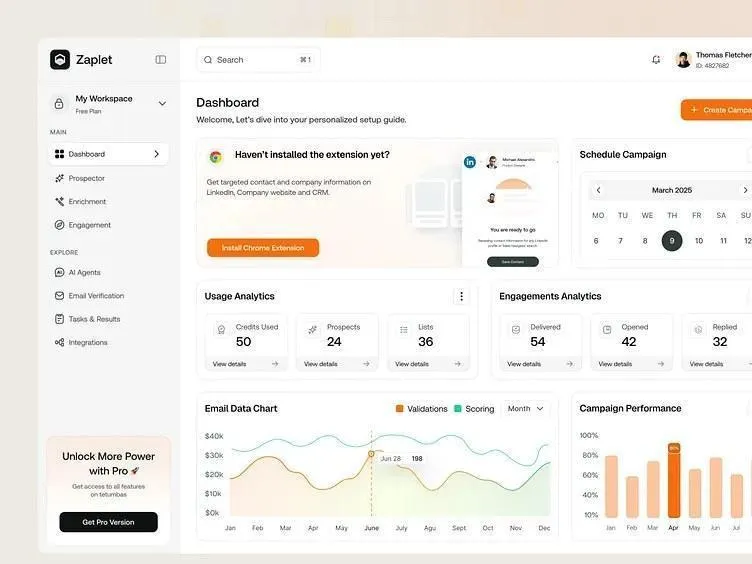
Starting price: Free forever (1 seat, 1 widget).
Beyond: Growth is $99/month flat or $79/month billed annually, with a $29/month Starter plan in between.
Yaplet is best for teams that use Mailchimp for email but also pay for other software, such as Typeform, Tidio, Klaviyo, and more.
Yaplet bundles tools similar to the software you currently use into a single, affordable subscription, so you can save big while keeping everything in one place.
It's GDPR-ready, EU-hosted, and quick to set up, making it a strong option for businesses that want fewer tools to manage at a great price.
Since Yaplet is a customer engagement platform first, it’s newer to email than other established email players. So, if you need a large library of templates or an extensive ecosystem of integrations, a dedicated email platform may offer more.
But if you only send occasional emails, then the free plan will likely be more than enough. If you want the entire rundown on where Mailchimp still wins and where it doesn’t, do check out our Mailchimp alternative page.
2. MailerLite: the best free Mailchimp alternative
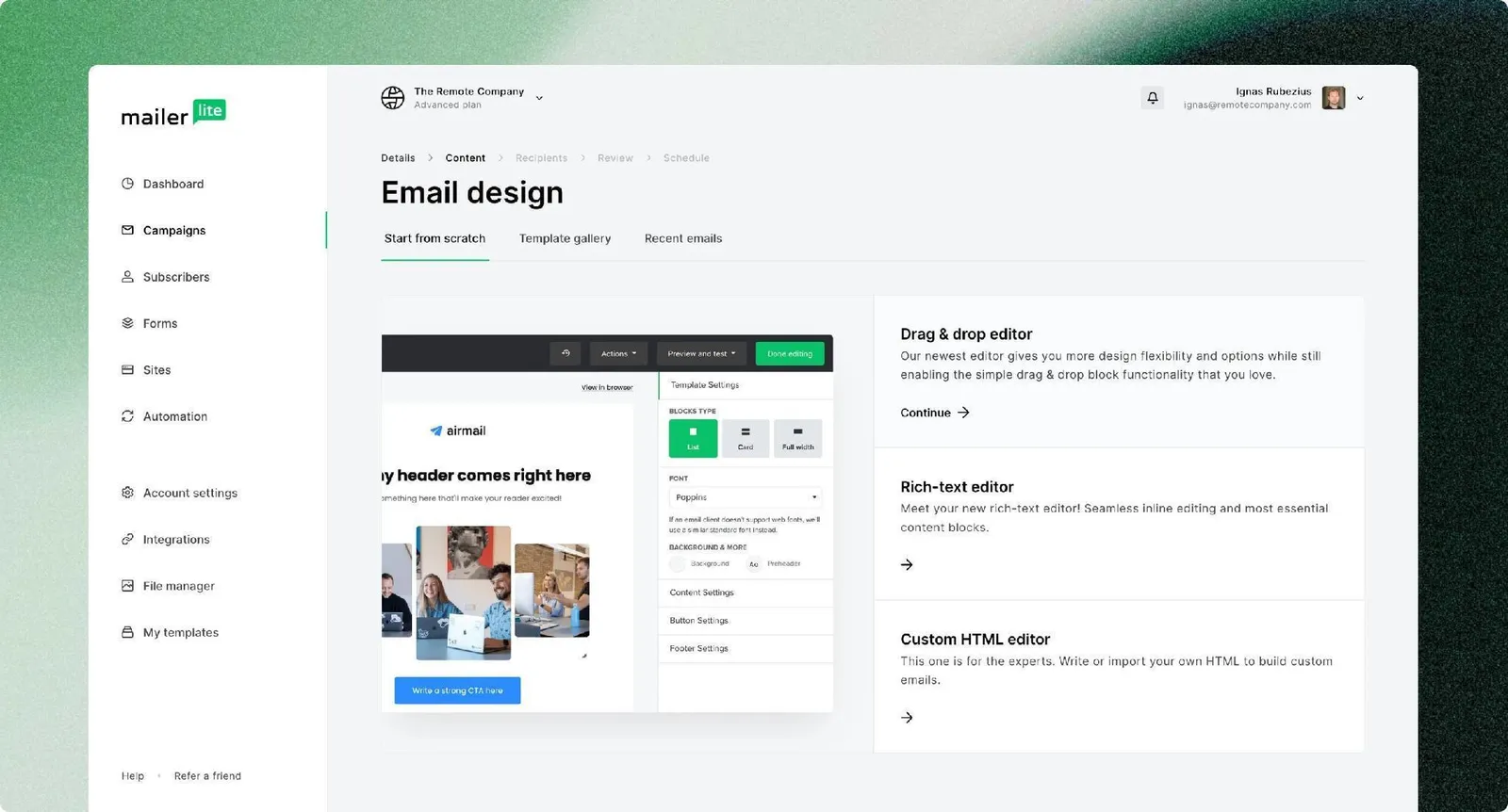
Starting price: Free for up to 500 subscribers and 12,000 emails/month.
Beyond: Growing Business from $10/month with unlimited sends.
MailerLite is for creators, bloggers, and solopreneurs who love Mailchimp’s simplicity but want a more straightforward alternative with lower fees.
What's great about MailerLite is that it's intuitive and offers plenty with its free plan: a simple email builder, a variety of templates, and even landing pages. When it comes to user experience and simplicity, it's one of the closest there is to Mailchimp.
When it comes to downsides, there's a limit on the number of subscribers on the free plan, and a MailerLite logo on your emails. There's also the manual approval process that new accounts go through, which trips people up.
3. Brevo: best for big lists and transactional emails
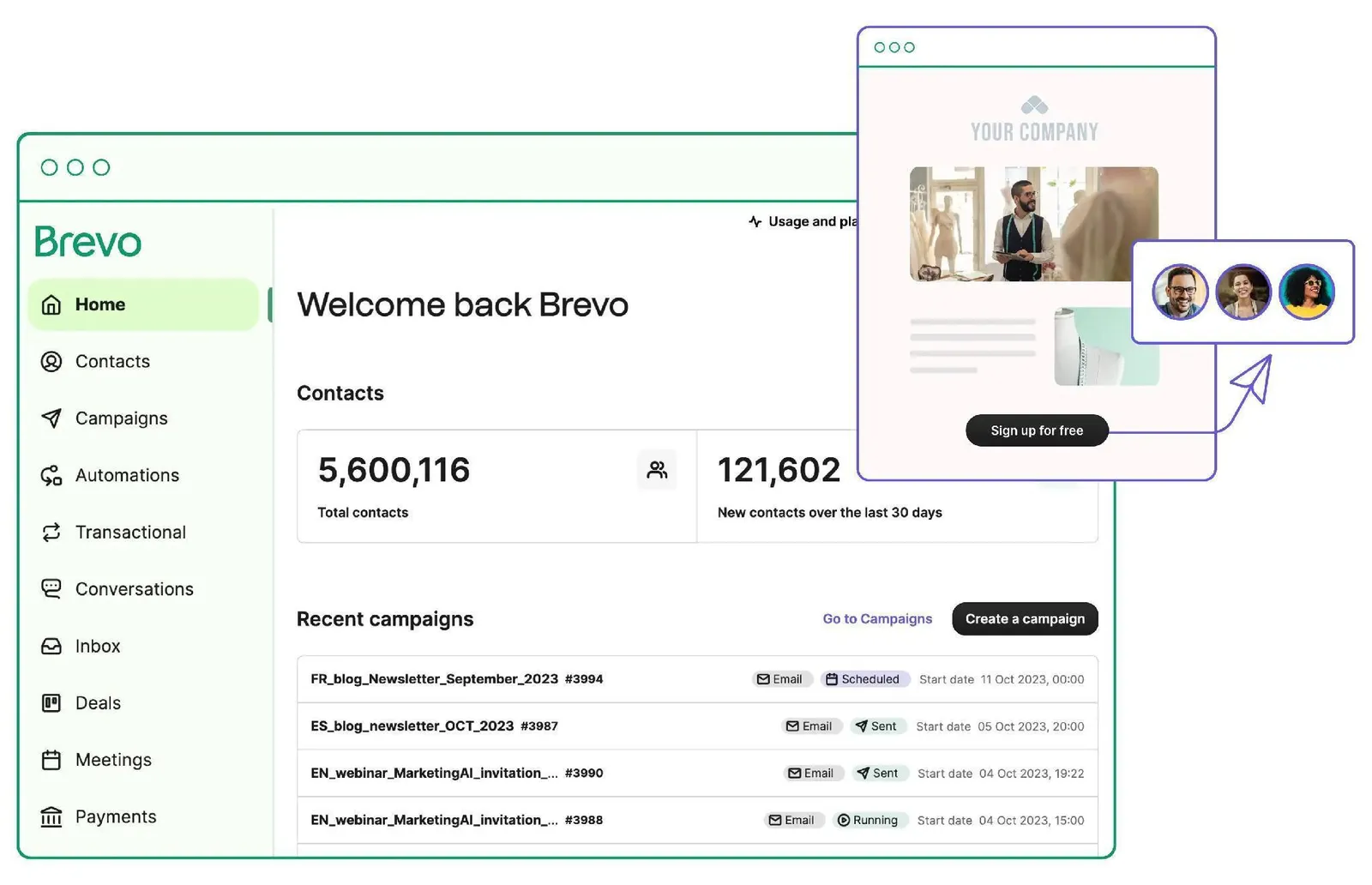
Starting price: Free plan with 300 emails/day and no real contact cap.
Beyond: Paid Starter from $9/month.
Brevo is great for businesses with large lists that don't send emails as frequently.
And since pricing is based on emails sent instead of contacts stored, you can have 50,000 on your list, email them twice a month, and pay a lot less than Mailchimp’s rate.
But good things have their downsides; the free plan has a daily limit of 300 emails, and their email editor isn't as polished as some competitors'.
4. ActiveCampaign: best for advanced automation
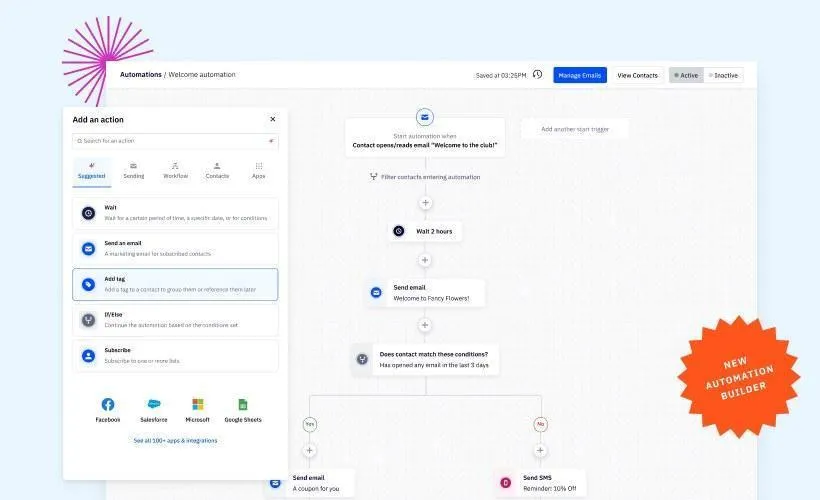
Starting price: Starter from 15/month for 1,000contacts, billed annually.
Beyond: Plus from $49/month.
ActiveCampaign is best for teams whose sole frustration with Mailchimp is its limited automation capabilities.
ActiveCampaign is known for its capable automation builder, with predictive sending and a CRM that can track deals rather than merely tagging contacts you have.
The pricing, however, is contact-based, meaning it would climb the same way Mailchimp does. And their handy extras, such as CRM pipelines, SMS credits, and seats, are paid add-ons, pushing the bill well past the $15 headline.
5. Moosend: best for the lowest price
Starting price: About $9/month for 500 subscribers; cheaper when paid annually.
Beyond: A 30-day free trial, but no forever-free plan.
Moosend is best if you’re a starter looking for cheaper automation and unlimited sends. They also provide an automation editor and other features for e-commerce businesses.
But since there are no permanent free plans and a smaller integration library than others, it might not be the best fit for you. That being said, it is the cheapest on the list.
Why teams are switching from Mailchimp
The brand recognition is earned, Mailchimp’s templates are polished, its reporting is great, and for people with a few dozen people on their lists, it is undeniably a great place to begin. Only will it be a problem when your list grows.
Here’s why teams are switching:
The free plan keeps shrinking. With Mailchimp's now 250 contacts and 500 monthly emails, it’s something most teams would hit in their first week.
You pay per contact, forever. The cost increases with the number of contacts you store. If the same person is listed in two different audiences, Mailchimp would still count them twice, raising the bill. According to EmailToolTester's 2026 review, this issue has been one of the most common complaints from small businesses.
The headline price isn't the bill. Transactional emails, messages, and custom domains all cost extra.
Support is gated on the cheap tiers. Which is rough when a campaign breaks an hour before you send.
If two or more of those are something you relate to, one of the following alternatives will serve your business better.
At-a-glance comparison
Tool | Starting price | Best for | Standout feature | Honest limitation |
|---|---|---|---|---|
Yaplet | Free forever; $99/mo flat (Growth) | Replacing email plus support tools | Flat price, plus email, chat, and AI in one login | Newer to pure email than specialists |
MailerLite | Free (500 subs); $10/mo | Creators and solopreneurs | Generous free plan, clean editor | Free plan dropped to 500 subs in 2025 |
Brevo | Free (300/day); $9/mo | Big lists, transactional email | Pay by emails sent, not contacts | Daily send cap on the free plan only |
ActiveCampaign | $15/mo (1,000 contacts, annual) | Advanced automation | Deepest automation and CRM | Add-ons push the real bill up |
Moosend | ~$9/mo (500 subs) | Lowest budget, e-commerce | Unlimited sends on every plan | No forever-free plan, smaller ecosystem |
How to pick the right alternative for your team
If you’re someone who’s running a solo business or a creator and wants a clean, no-nonsense newsletter with a free plan, opt for MailerLite.
If, on the other hand, you are running an e-commerce store or like to track every dollar that goes in and out, Moosend offers unlimited sends and automation at the lowest price.
Brevo if your list is huge but sends rarely, while ActiveCampaign offers great automation even with its higher price.
But if your team uses different tools and would rather have an all-in-one place (email, chat, support, feedback), then Yaplet replaces the lot for $99 monthly. For comparison, Mailchimp alone costs about the same at 5,000 contacts, and that's before paying for any additional support software.
The cheapest way to test the move
You can always try things out before committing to a tool. Each is unique, with its own set of highs and lows, and an afternoon spent trying this and that is much better than spending your money on tools you haven’t tried yourself yet.
If the all-in-one route sounds appealing to you, you can start with Yaplet and have all your tools from email and live chat to AI support ready within minutes.
FAQ
Why is Mailchimp so expensive?
It’s because you pay for every contact you store, including the unsubscribed and duplicates across audiences. Extras like transaction email and SMS also add up to the cost, with the Standard Plan running about $100 a month at 5,000 subscribers, and that’s before any of the extra costs.
Is there a cheaper alternative to Mailchimp for small businesses?
Yes, Brevo, Yaplet, Moosend, and MailerLite all cost less than Mailchimp at similar list sizes. Brevo is the strongest for large lists, Moosend for low-cost automation and unlimited sends, and MailerLite for creators who want a simple editor with a forgiving free plan.
Can I switch from Mailchimp without losing my subscribers?
Yes, every tool listed here imports your contacts by CSV or direct sync. Most don't cost anything for migration support. From Mailchimp, you export your audience and templates first, then run both in parallel for a campaign or two before canceling.
Which Mailchimp alternative is best for creators?
Yaplet. Its editor is simple, templates are suitable for newsletters and digital products, and its free plan covers you well enough for a solo creator.
Pick the tool that matches you and not against you. Start with something free and keep it all in one place.