
Intercom is an effective tool, plus Fin AI has great resolution rates. But most teams pay $400 to $1,200 each month, even though they use only about 35% of that value. The bloat comes from resolution-based billing of Fin AI and various seat upgrades that not every team needs. A renewal email comes in every November, but the choice doesn’t mean a thing if you don’t have a good alternative.
If you’re among those looking to exit Intercom’s burdensome fees, 2026 is likely the easiest it’s been to do so. Many AI Agents from cheaper alternatives now accomplish 55 to 70% ticket resolution rates for routine intents, meaning the performance gap with Fin AI is now a bridge that many can cross.
The biggest problem, though, is sorting the truly effective options, so in this post, we’ve made it easy. Here are five legit options for SMBs and scaling startups with prices at less than half of Intercom’s seat and Fin AI costs. Let’s get into it.
What "Half the Price" of Intercom Actually Means in 2026
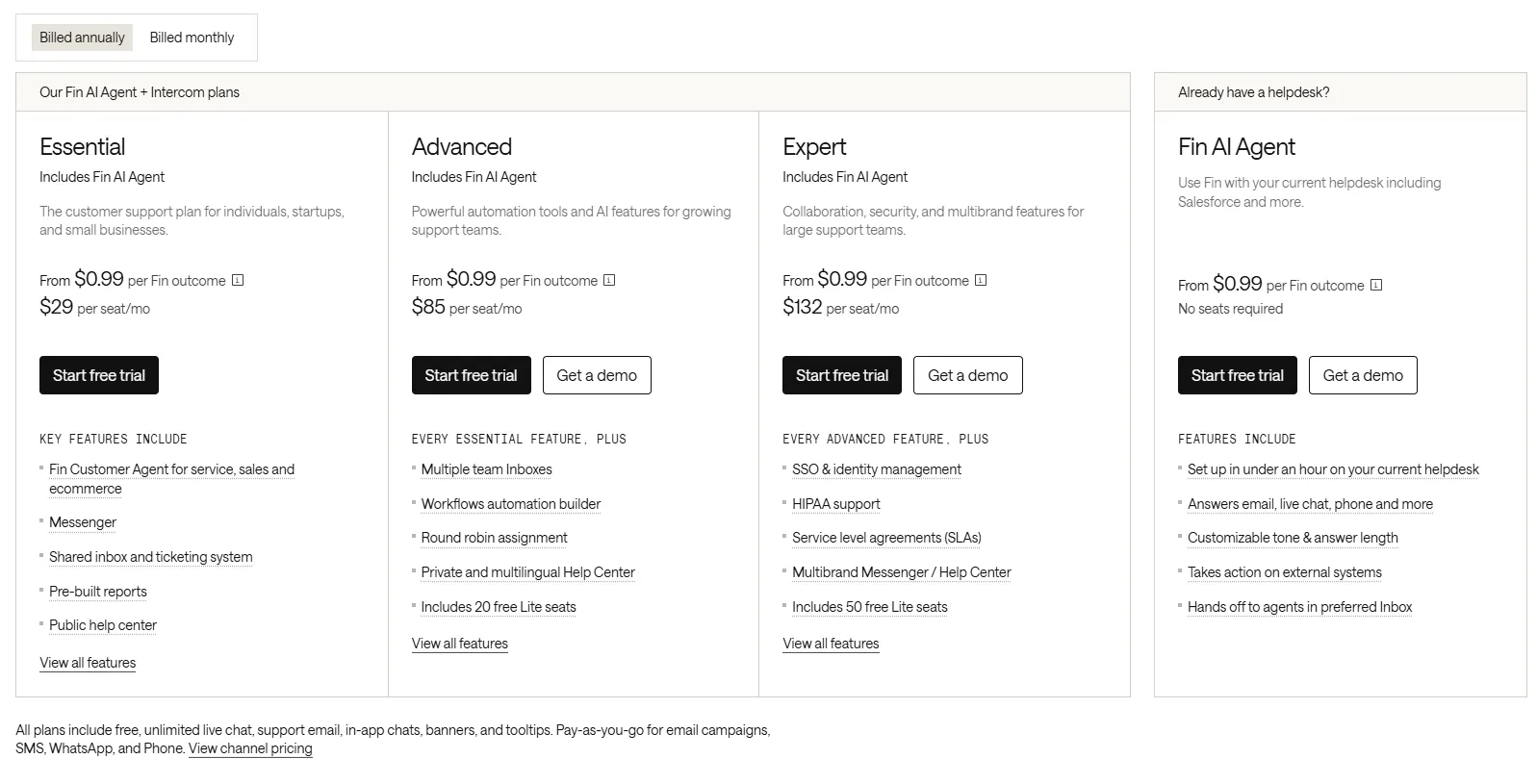
Intercom bills annually starting at $29 per seat each month, then goes up to $85 for Advanced and $132 for Expert. But these are never the actual fees you pay; monthly dues go up by 20 to 25% over that amount, and Fin AI’s resolution-based pricing seriously compounds those costs.
Reviews on G2 and Capterra report 2 to 3 times the expected monthly rates, and doing the math shows the same. A five-seat support team on Advanced runs a $425 monthly bill, and when you add 1,000 resolutions to that, the scale costs $1,400+. Half price simply means 700 or less than that, and our picks here all qualify for that.
Why Teams Are Switching Away from Intercom
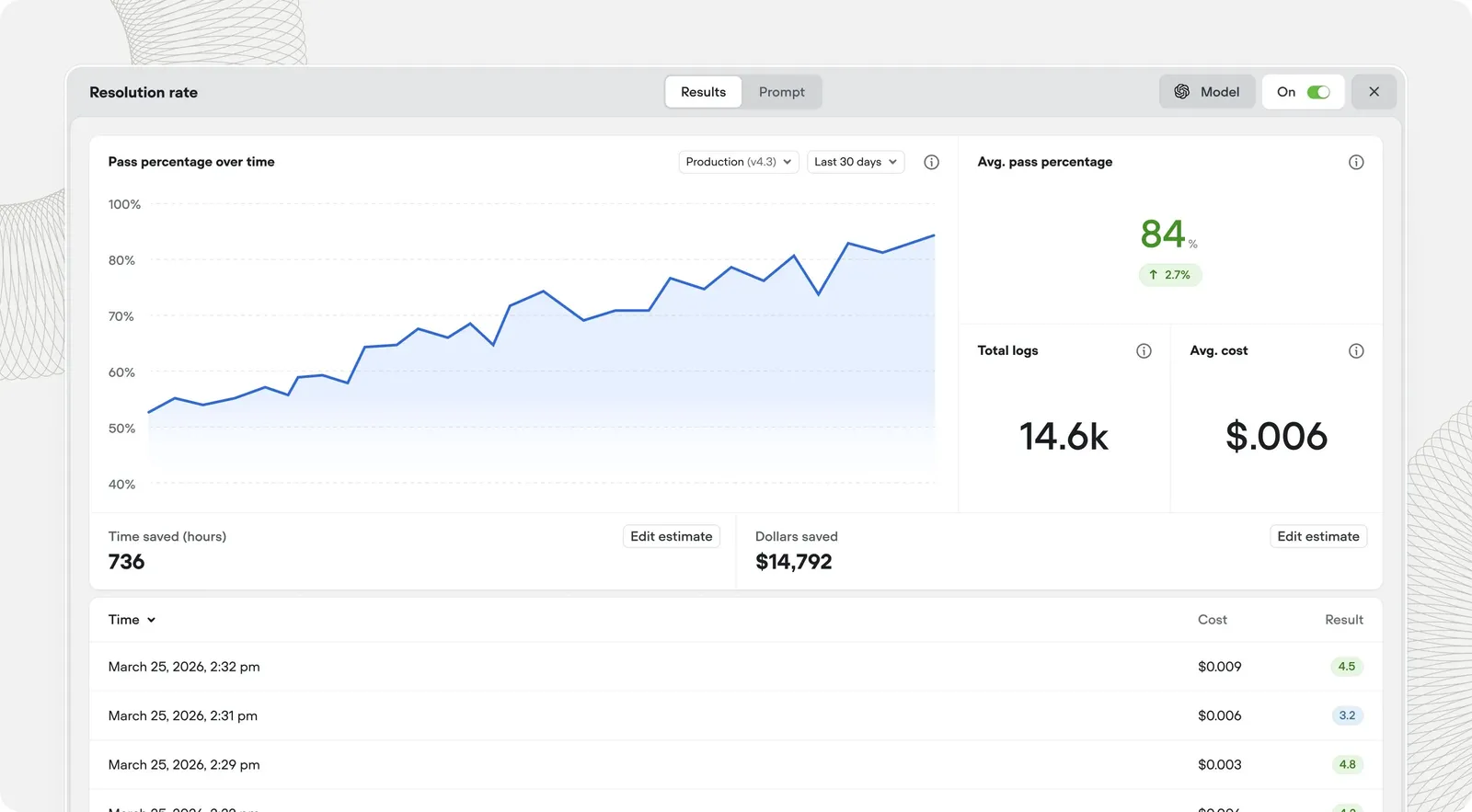
Three significant developments caused many to rethink their use of Intercom. The first is how AI deflection rates from others have caught up to Fin AI. Industry benchmarks now identify the median tier-1 deflection at 41%, the top quartile at 58%, and category-leading deployments at 80-90% for routine intents.
Then there’s the realization that the seat-plus-resolution model makes budgeting hard. Monthly costs can easily spike 30 to 50% each month, making AI’s ability to lower costs meaningless. Flat pricing is now applied by most other solutions.
The last one is that SMBs and scaling startups now recognize that Intercom’s rates cost enterprise-level pricing for features they don’t need. For example, most teams only need live chat, AI deflection, and a knowledge base.
The 5 Best Intercom Alternatives for Customer Support in 2026
1. Yaplet: The Best Unified Stack Option
Starting Price: Free. Paid plans start at a $29 monthly flat fee.
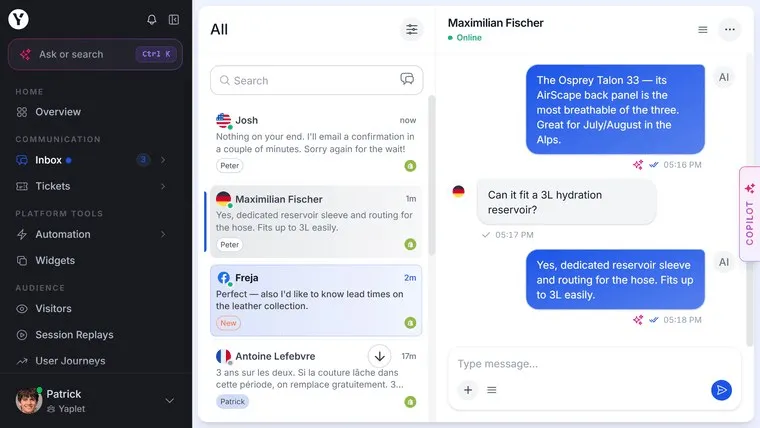
Yaplet is the best pick for most SMBs and scaling startups because it replaces 10+ other tools that cover live chat, a knowledge base, product tours, bug reporting, forms, email marketing, automation, and shift management. You’ll get all this for $99 a month on the Growth plan, and that's for 10 team members, 5 widgets, 100000 contacts, and even a multi-channel inbox (WhatsApp, Instagram, Facebook, Discord).
You also get Vex AI, which can autonomously handle 75% of support tickets by reading your knowledge base in real time. This also eliminates per-resolution pricing, as both Starter and Growth plans include unlimited AI answers. The setup time takes just minutes, and migration from either Intercom or Zendesk is supported.
This is best for SMBs and scaling startups that pay for 4+ solutions but are looking to consolidate, and typically replaces Intercom + Pendo + Typeform + Mailchimp + Usersnap, which can cost anywhere from $745 to $2,463 per month. The switch to Yaplet results in an 88%-96% reduction in cost.
But while this is built to cover the needs of many teams, there are still limits. For example, if your team needs specialist tools like a 200-seat enterprise compliance posture or deep ecommerce entanglement with Shopify-Klaviyo, then this is not the right tool for you.
2. Help Scout: For Email-First Support Teams
Starting Price: Free for 5 users. Standard costs $25 per user per month.
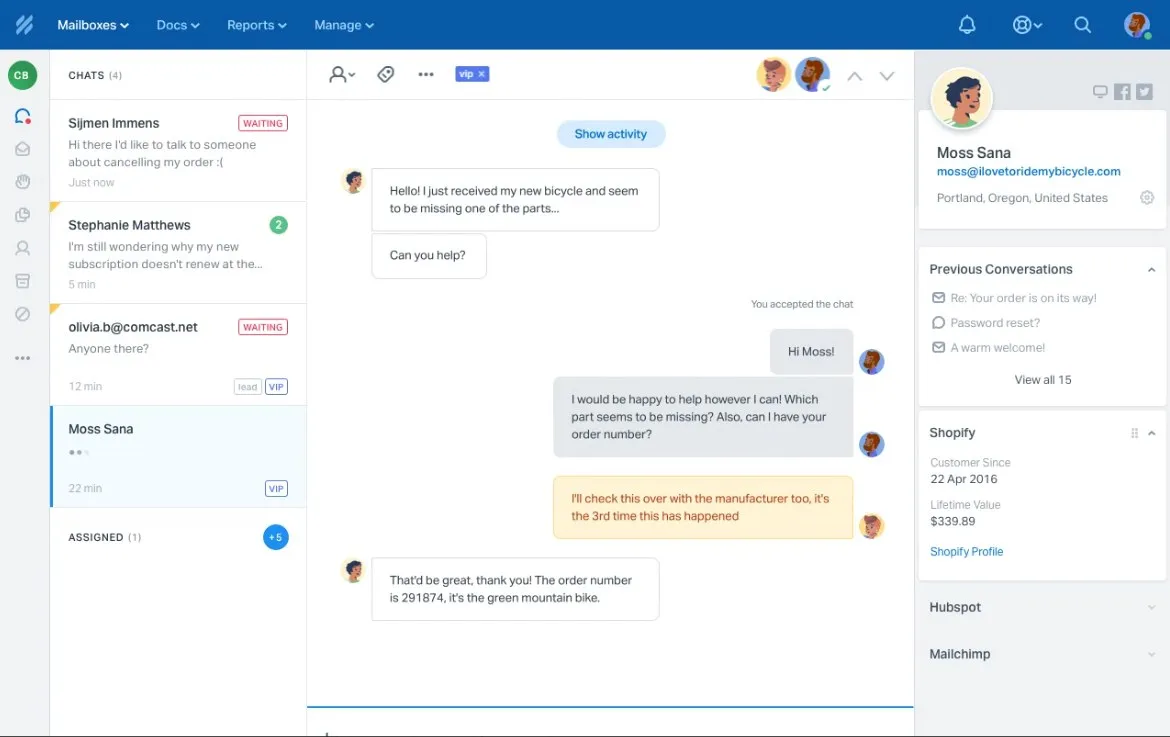
For teams that rely more on Email support than AI resolution, Help Scout is a solid option with its Standard plan covering 2 shared inboxes, 150 workflows, a knowledge base via Docs, and Slack/Zapier integrations. Plus is the most popular tier at $50 per user per month and adds live chat and richer integrations, while Pro, at $65 per user, is their enterprise tier.
Their AI layer costs $0.75 per resolution as an add-on and is still cheaper than Fin AI. Help Scout is reasonable enough to let you ensure AI resolution availability, but still at a reduced cost. It certainly helps that, with Help Scout’s email-first approach, support agents who’ve used Outlook for years can start right off the bat.
Help Scout’s shared inbox UX is easily its best feature and is the best for teams with an email-first support model. But the inclusion of its AI solution certainly feels like an afterthought, not to mention that costs still stack up if you’re trying to deflect 50+% of incoming volume using AI. A different tool would be better in that case.
3. Tidio with Lyro AI: The E-commerce-First Pick for SMBs
Starting Price: Free. Starter at $29 each month, with Lyro AI from $39 monthly
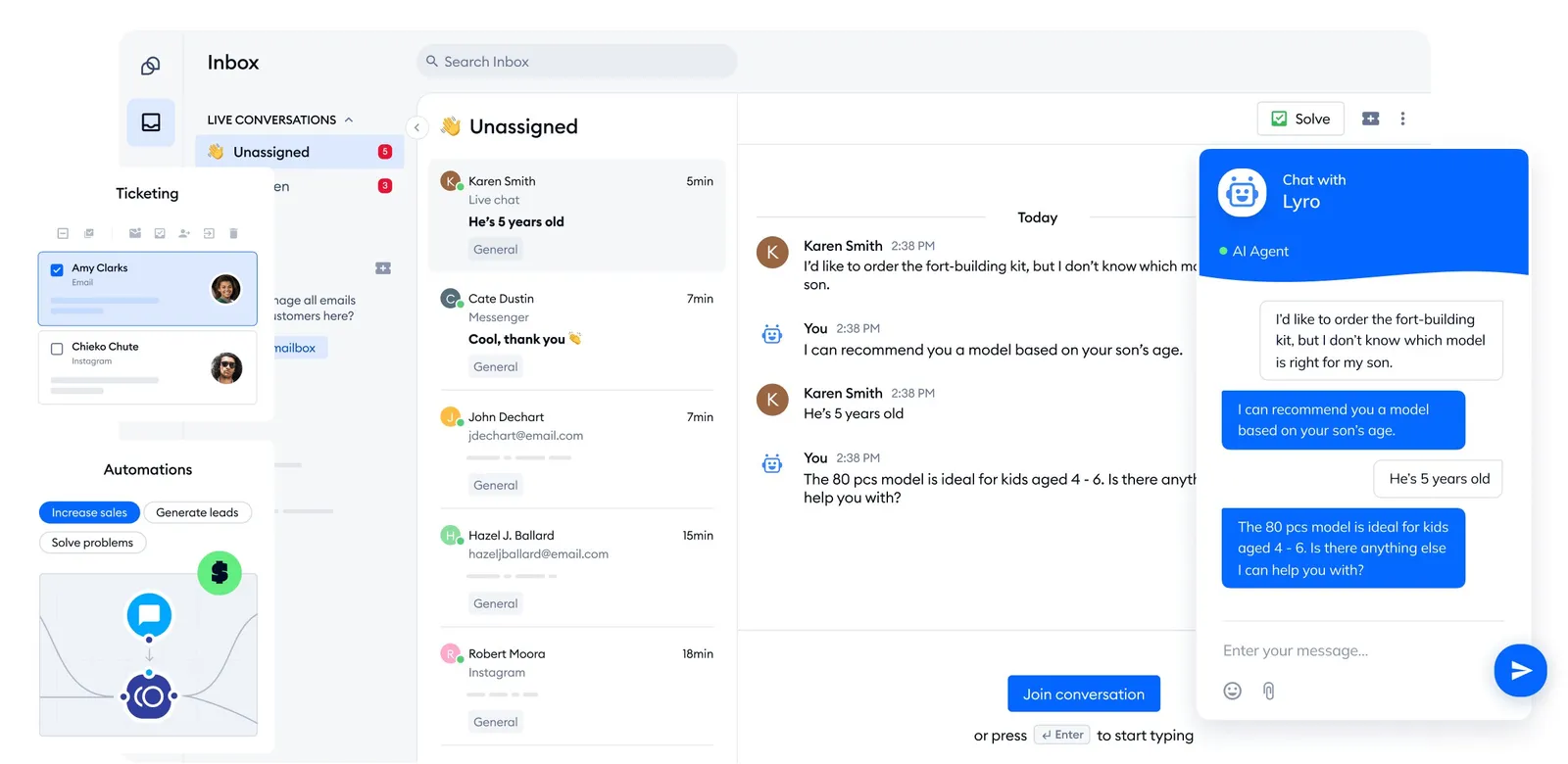
Tidio offers a live chat widget with a chatbot builder, plus the Lyro AI agent, which can resolve up to 67% of customer problems through support content drawing. This works best for e-commerce SMBs on Shopify who want chat-driven conversion and AI deflection for their tier-1 queries. This Shopify integration, with its added focus on revenue-relevant charts (cart abandonment, product questions, order status), can’t be beat for this very specific use case.
But for teams outside of e-commerce, Tidio’s value drops significantly. Since the base plan is priced separately from Lyro, a low-end setup comes down to $68, which is higher than many other starter plans, and higher-tier prices escalate quickly. A team’s initial $29 monthly fee can quickly turn into $300 when handling more resolutions.
Tidio’s e-commerce is truly strong, but that’s really where you draw the line or face the same pricing escalations with Intercom.
4. Crisp: Workspace-Based Pricing for Small Teams
Starting Price: Free. Mini at €45 per workspace monthly.
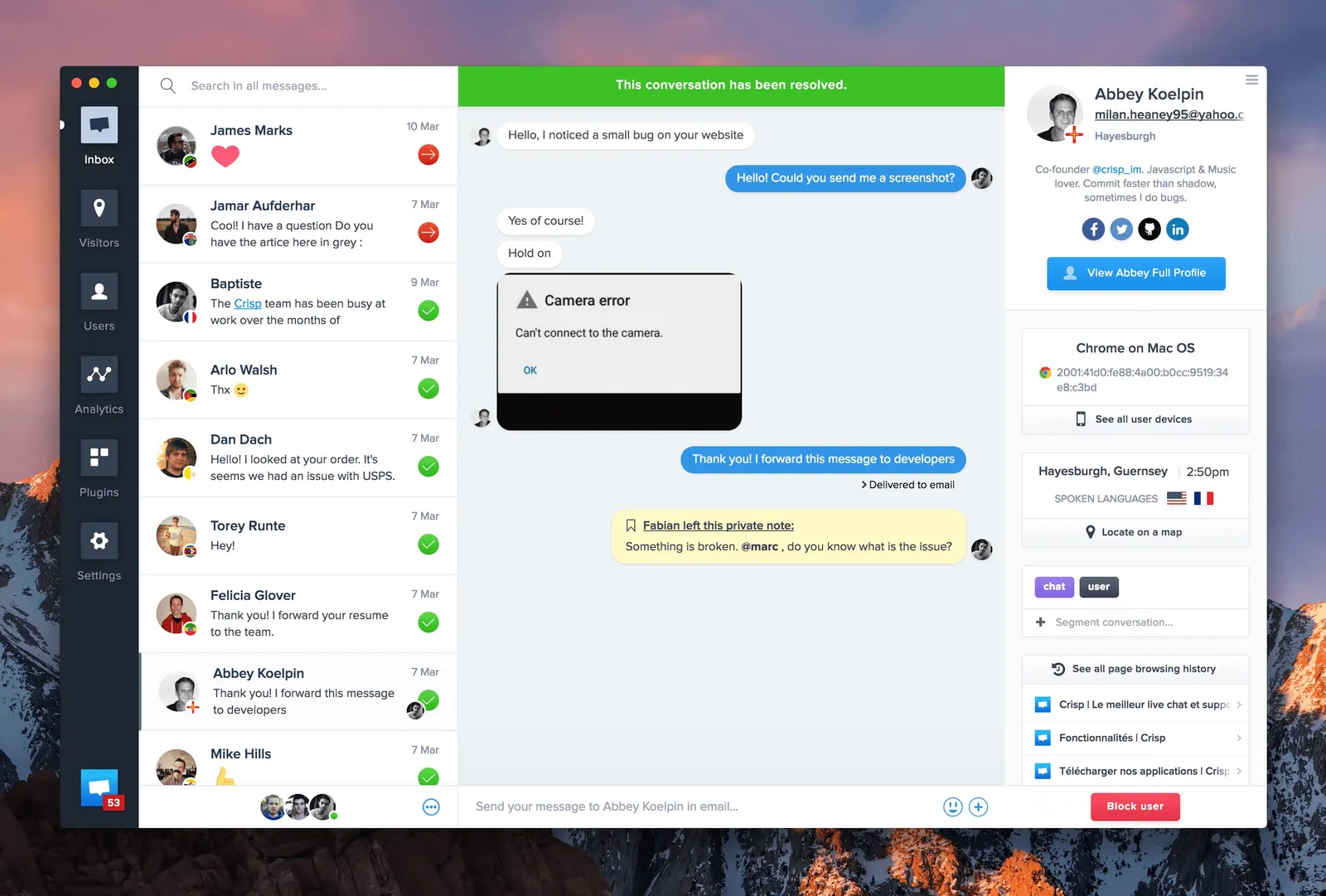
Crisp offers a very different pricing structure that gives it a considerable advantage for specific types of teams. You pay per workspace, which is enough to cover up to a 15-person team with Mini at €45. The €95-per-month Essentials plan includes the workflow builder, knowledge base, omnichannel inbox, and Hugo AI chatbot. Plus, at €295 per month, there's unlimited AI use, a ticketing system, and white-labeling.
Having flat, predictable pricing for a 5- to 15-person team is a huge win and needs no further explanation. With Crisp Essentials at €95, a 10-person team gets the same features as Help Scout Plus at $500 or Intercom Advanced at $850 for the same headcount. Crisp also covers the channel surface (Instagram, Messenger, WhatsApp, Telegram, SMS, Line, Viber, Discord) at no extra cost.
The biggest downside here is that Crisp’s AI capabilities are lower than Vex or Lyro at the same usage tier. If AI deflection is your priority, Crisp’s sub-70% resolution rates will pale in comparison to Vex's. This is not the tool for an AI-first deployment.
5. Freshdesk: Zendesk Alternative For Traditional Ticketing-First Teams
Starting Price: Free up to 2 users. Growth at $15 per agent monthly.
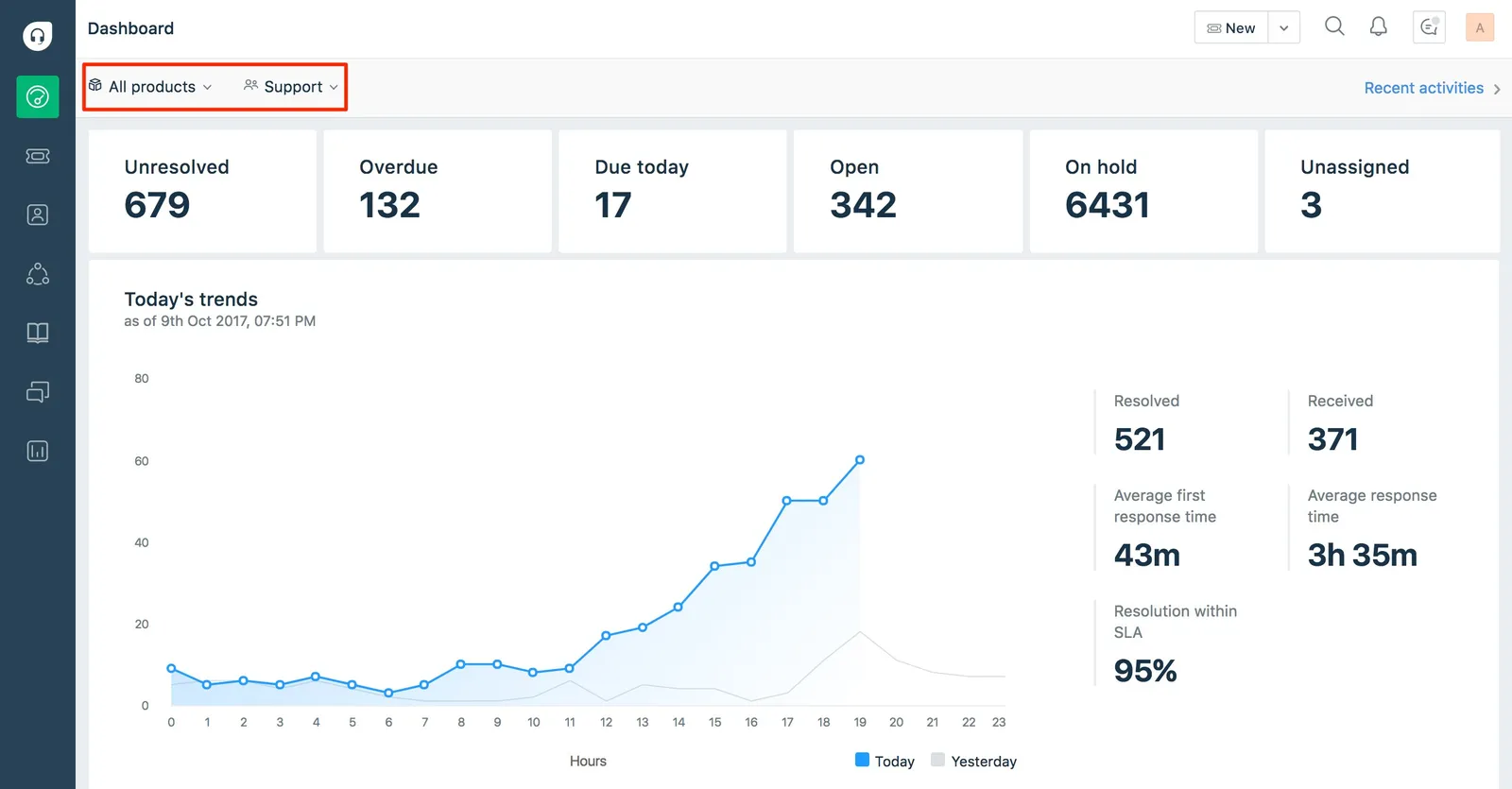
Freshdesk’s Growth plan provides ticketing, a knowledge base, and basic automation for $15 per agent each month. Pro adds custom workflows, multi-language support, and richer reporting for $49. Enterprise scales from that point on. This set of features makes Freshdesk seem like a mini-Zendesk, and is most comparable to that.
But while it’s mainly a Zendesk alternative, the much cheaper per-agent cost affords teams a level of support comparable to Intercom's, though at the cost of some conversational and AI surface area. Its conversational layer feels old, so a primarily chat-and-AI model is not well supported.
But it has a mature ticketing engine and reporting depth at a much lower entry price. This is enough to make it an excellent option for SMBs on the larger side or even for certain mid-market teams running a traditional ticketing customer engagement model, especially for those who need standard reporting, ITSM-adjacent workflows, and a familiar interface.
For the best value comparison with Intercom, Pro is the best tier to consider.
Chat and Support Tool Comparison of The 5 Best Alternatives to Intercom
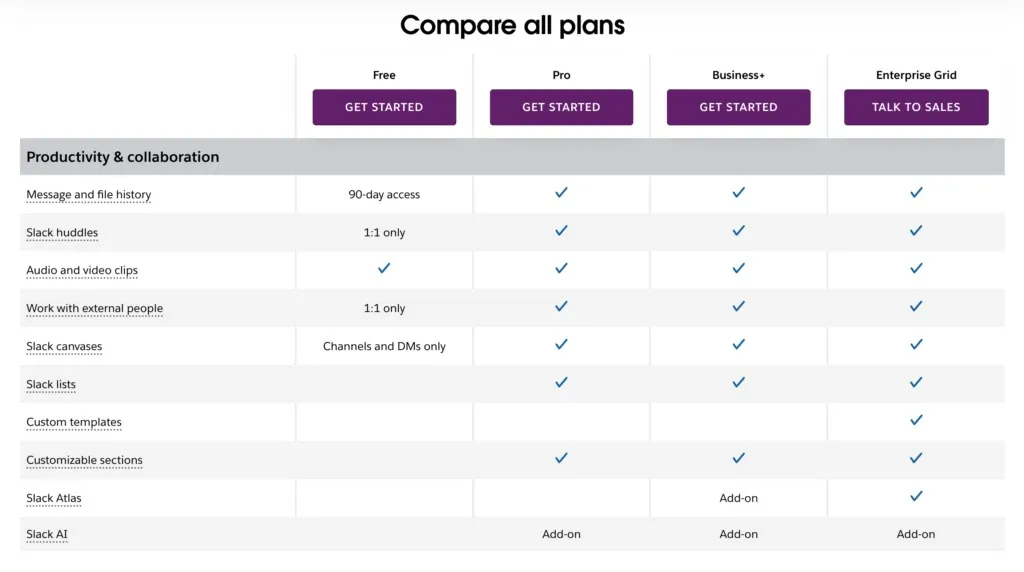
All five of these recommendations are well below half of the cost of Intercom. Below is a chart that lets you compare key features more easily.
Tool | Starting price | Best for | Standout feature | Honest limitation |
|---|---|---|---|---|
Yaplet | Free; $29/mo Starter; $99/mo Growth (10 seats, flat) | SMBs and scaling startups are consolidating 4+ point solutions | Replaces 10+ tools (live chat, AI agent Vex, knowledge base, tours, forms, bug reporting, marketing) at one flat price | All-in-one model is more than enterprise teams with deep specialist tooling need |
Help Scout | Free for 5 users; Standard $25/seat/mo | Email-heavy support teams who want a clean shared inbox | Best shared-inbox UX in the category; feels like email, not a queue | AI is bolted on at $0.75/resolution; 10 seats on Plus = $500/mo |
Tidio + Lyro | Free; Starter $29/mo + Lyro from $39/mo | E-commerce SMBs on Shopify driving chat-led conversion | Lyro AI handles ecommerce intents (returns, shipping, sizing) well | Dual billing scales fast; 1,000 Lyro chats/mo runs ~$149 |
Crisp | Free; Mini €45/mo; Essentials €95/mo (per workspace) | Teams of 5 to 15 who want flat per-workspace pricing | Per-workspace pricing means adding agents doesn't move the bill | Hugo AI agent is lighter-weight than Vex or Lyro at the same tier |
Freshdesk | Free for 2 agents; Growth $15/agent/mo; Pro $49/agent/mo | Mid-market teams running a traditional ticketing model | Mature ticketing engine and reporting depth at low entry price | Conversational/AI surface area feels older; Pro narrows the gap with Intercom |
How to Pick the Right Intercom Alternative for Your Team
The best tool is the one that matches your support model. You don’t need to match Intercom’s best analytics or mobile app support. All you need to do is take care of your team’s work processes and cut costs at the same time.
If your fragmented stack and its combined cost are too much of a burden, Yaplet is the way to go. It covers 90% of jobs across Intercom, Pendo, Typeform, Mailchimp, and Usersnap, all with a single monthly bill of $99. That’s a significant cost reduction for an SMB or scaling startup that already pays $1,000 per month for an entire tool stack.
Here’s the best use case for the other four picks on this list:
Help Scout for email-heavy teams that want the cleanest shared inbox
Tidio with Lyro for a Shopify store’s team doing serious chat-driven volume
Crisp for 5 to 15-person teams who want flat pricing for better growth
Freshdesk for the traditional help desk model with ticketing at much lower costs
The Cheapest Way to Test the Move
Many are surprised by how little of Intercom they’re actually using, but it takes a close look to tell. Try Yaplet for Free (no credit card required, one widget, 50 AI answers per month) and run the same docs you use on Fin. If Vex resolves the same volume of tier-1 queries, then the result is clear.
If the trial doesn’t work out, you lose out on one afternoon. But if it proves effective, you’ll get $400 to $2,000 off your monthly customer experience improvement costs by this time next week. That’s a no-lose situation right there.